In Chattanooga, we deal with a complex mix of residual soils over limestone and deep alluvial deposits along the Tennessee River. A soil mechanics study here must account for the karst topography that can cause sudden voids or uneven settlement. Before any foundation design, we run a full suite of lab and field tests. This often includes a pavement evaluation to understand subgrade behavior under traffic loads. Our team has handled dozens of projects across the city, from the ridges of Signal Mountain to the floodplains near downtown. The variability is significant, and a generic approach simply doesn't work in this region.
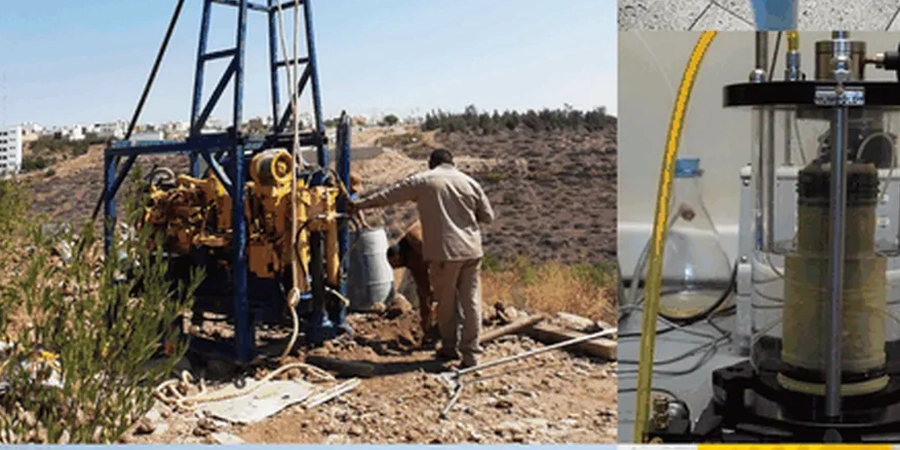
Chattanooga's karst geology means a soil mechanics study is not optional—it is the difference between a stable foundation and a costly repair.
Technical details of the service in Chattanooga
Local geotechnical conditions in Chattanooga
Chattanooga expanded rapidly in the 20th century, filling low-lying areas with imported fill and building over limestone caves. A soil mechanics study is critical here because the risk of differential settlement is real. We have seen cases where a building's corner sank 10 cm due to an undetected void below the slab. The Tennessee Valley Authority flood control projects also altered groundwater levels, which can trigger sinkhole collapse. Our studies include a collapse potential assessment and a groundwater monitoring plan to flag these hazards early.
Our services
We offer three core services for soil mechanics studies in Chattanooga, each tailored to the local geology and project type.
Site Investigation & Sampling
We drill boreholes up to 30 meters deep using hollow-stem augers or rock coring. Samples are extracted with split-spoon samplers for SPT and thin-walled tubes for undisturbed clay samples. Each hole is logged by a geotechnical engineer.
Laboratory Testing Suite
Our in-house lab runs index tests (Atterberg limits, grain size) and strength tests (triaxial, direct shear, unconfined compression). For settlement analysis, we perform one-dimensional consolidation tests on Chatanooga clays.
Geotechnical Report & Recommendations
We compile all field and lab data into a comprehensive report. It includes soil profiles, bearing capacity calculations, settlement estimates, and foundation recommendations per IBC 2021. The report is stamped by a licensed professional engineer.
Common questions
How long does a soil mechanics study take in Chattanooga?
A typical study takes 2 to 4 weeks from mobilization to final report. Drilling and sampling take 2 to 5 days depending on the number of borings and site access restrictions. Lab testing adds another 7 to 14 days.
What is the cost range for a soil mechanics study in Chattanooga?
For a standard residential or small commercial project, the cost ranges between US$3,530 and US$4,630. This includes drilling up to three boreholes, full lab testing, and a geotechnical report. Larger or more complex sites may cost more.
Do I need a soil mechanics study for a small addition or deck?
In Chattanooga, even small projects benefit from a study if the soil is suspect. For a deck or light addition, a limited investigation with two hand auger borings and basic lab tests may suffice. We can scope it to fit your budget.
What makes Chattanooga's soil different from other cities?
The primary difference is the karst geology. Limestone bedrock dissolves over time, creating voids and sinkholes. Also, the river terraces contain layers of soft clay and loose sand that settle unevenly. A standard study must address these specific risks.
Coverage in Chattanooga
Service video
This service complements our laboratory testing work for a complete project analysis.