A common mistake we see from contractors in Chattanooga is assuming the deep clay layers along the riverbanks provide enough stability to ignore seismic settlement. But the Tennessee River Valley has a complex alluvial history, with loose sand lenses and silty deposits that can lose strength during an earthquake. We have mapped these zones through dozens of projects, and the pattern is clear: ignoring soil liquefaction analysis near the river or along filled industrial sites leads to differential settlement and structural damage. For brownfield redevelopment in the Southside or new foundations on Missionary Ridge, we always combine the liquefaction screening with a MASW-Vs30 survey to capture shear wave velocity profiles, and cross-check results using SPT-based triggering curves per Youd-Idriss (2001).
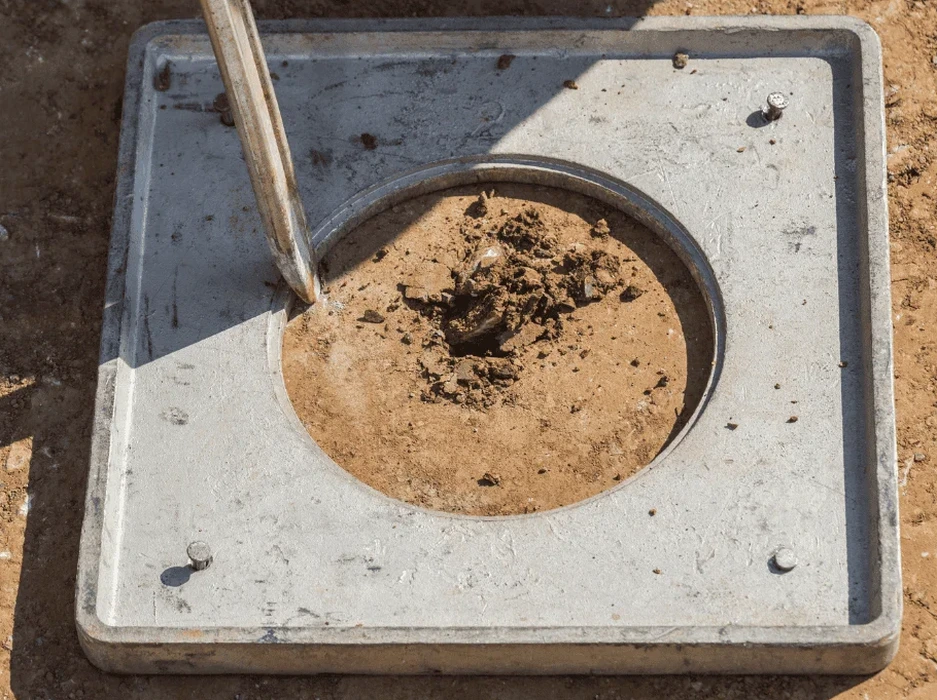
In Chattanooga, loose saturated sands between 5 and 12 meters depth are the primary liquefaction hazard — ignoring them means accepting differential settlement up to 15 centimeters.
Technical details of the service in Chattanooga
- SPT N-value correction for fines content and overburden (ASTM D1586)
- Cyclic stress ratio (CSR) calculation using peak ground acceleration from the USGS seismic hazard model for Hamilton County
- Cyclic resistance ratio (CRR) from NCEER workshop curves
- Post-liquefaction settlement estimates using Tokimatsu & Seed (1987) method
Local geotechnical conditions in Chattanooga
What many local engineers overlook is that Chattanooga sits in a moderate seismic zone, not a high one. That gives a false sense of safety. But the 2011 Mineral, Virginia earthquake (magnitude 5.8) caused damage in structures over 600 km away. In our soil conditions, even a magnitude 5.5 event with epicenter near the Eastern Tennessee Seismic Zone could trigger liquefaction in loose, saturated sands. The real risk? Lateral spreading along the riverbanks — we have seen it cause foundation tilting in two separate developments near the Chattanooga Choo Choo district. Mitigation with deep soil mixing or stone columns is expensive, but far cheaper than retrofitting a settled building.
Our services
We offer two complementary services to address liquefaction risk in Chattanooga, from initial screening to detailed mitigation design.
Liquefaction Screening & Hazard Mapping
We collect SPT borings with continuous sampling, measure groundwater levels, and run cyclic resistance analysis per NCEER 2001. The output includes factor of safety profiles and settlement estimates for each borehole, plus a site-specific hazard map showing liquefaction potential zones.
Mitigation Design & Verification
For sites with FS < 1.0, we design Improvement solutions such as stone columns, deep soil mixing, or compaction grouting. We verify post-treatment SPT N-values and perform additional cyclic testing if needed to confirm target CRR is achieved.
Common questions
How much does a soil liquefaction analysis cost in Chattanooga?
For a typical residential or commercial project in Chattanooga, the cost ranges between US$2.160 and US$4.560. This includes field SPT borings, laboratory fines content tests, cyclic stress analysis, and a final report with mitigation recommendations. Prices vary with depth and number of boreholes.
Is Chattanooga at risk of soil liquefaction during an earthquake?
Yes, portions of Chattanooga — especially the alluvial floodplains along the Tennessee River and former industrial areas with loose fill — are susceptible. The USGS hazard model assigns peak ground accelerations of 0.15g to 0.25g for a 2% probability of exceedance in 50 years, which is enough to trigger liquefaction in loose saturated sands with (N1)60 below 15 blows/ft.
What is the difference between liquefaction screening and a full liquefaction analysis?
Screening uses regional maps and simplified criteria (e.g., fines content < 15%, SPT N-value < 20) to flag potential zones. A full analysis includes site-specific SPT borings, corrected N-values, CSR and CRR calculations, and settlement estimates. For any structure with a design life over 50 years in Chattanooga, we recommend the full analysis.